FILAMENT
Brass & Glass Lighting · Bespoke Commissions
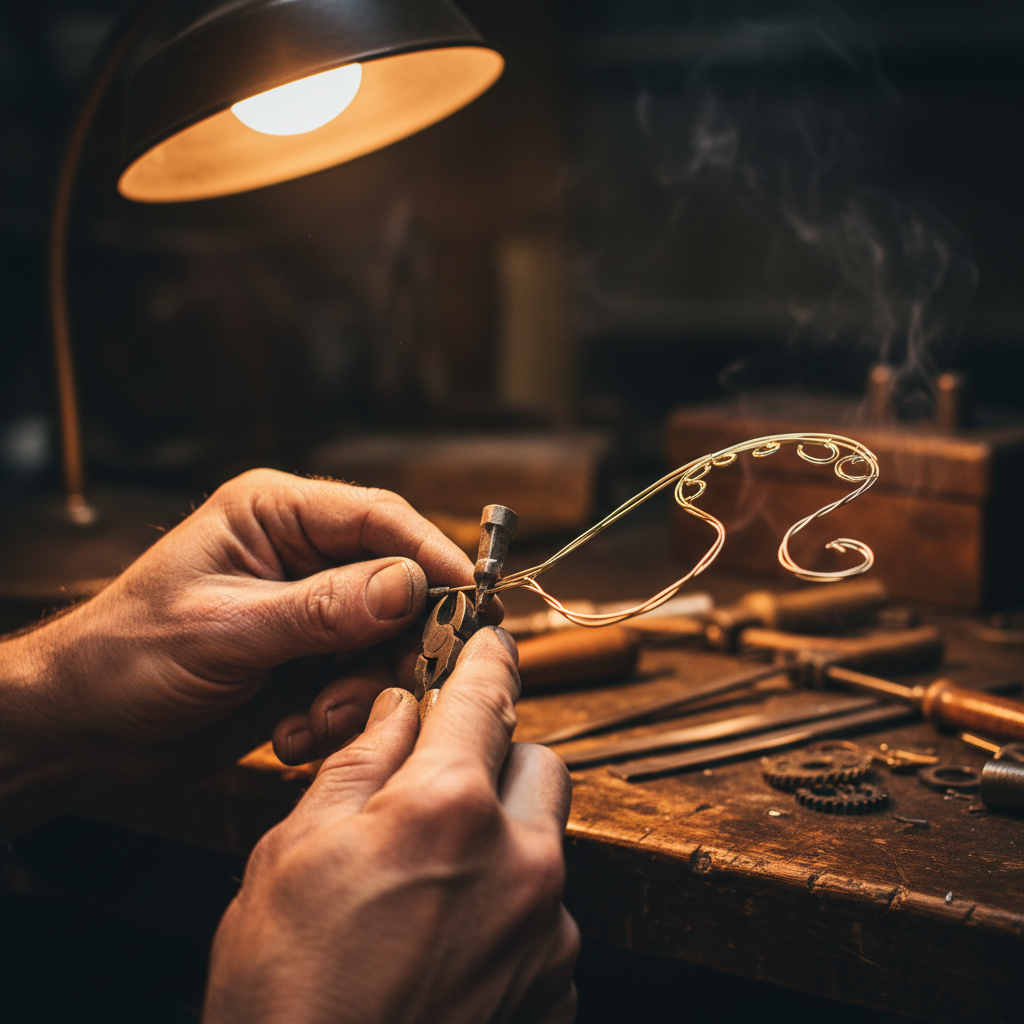
Forming the primary armature · Raw brass sheet · New York Atelier
Every fixture begins as a sketch and ends as a decision.
We work from primary materials — sheets of raw brass, hand-blown borosilicate glass, and cast bronze hardware. No intermediaries. No catalog parts. Each armature is bent and soldered in our Brooklyn atelier; each glass element is cut and fire-polished to tolerance.
The process takes between eight and fourteen weeks. That is not lead time — that is the time required to make something that will still be hanging in the same room in 2075.
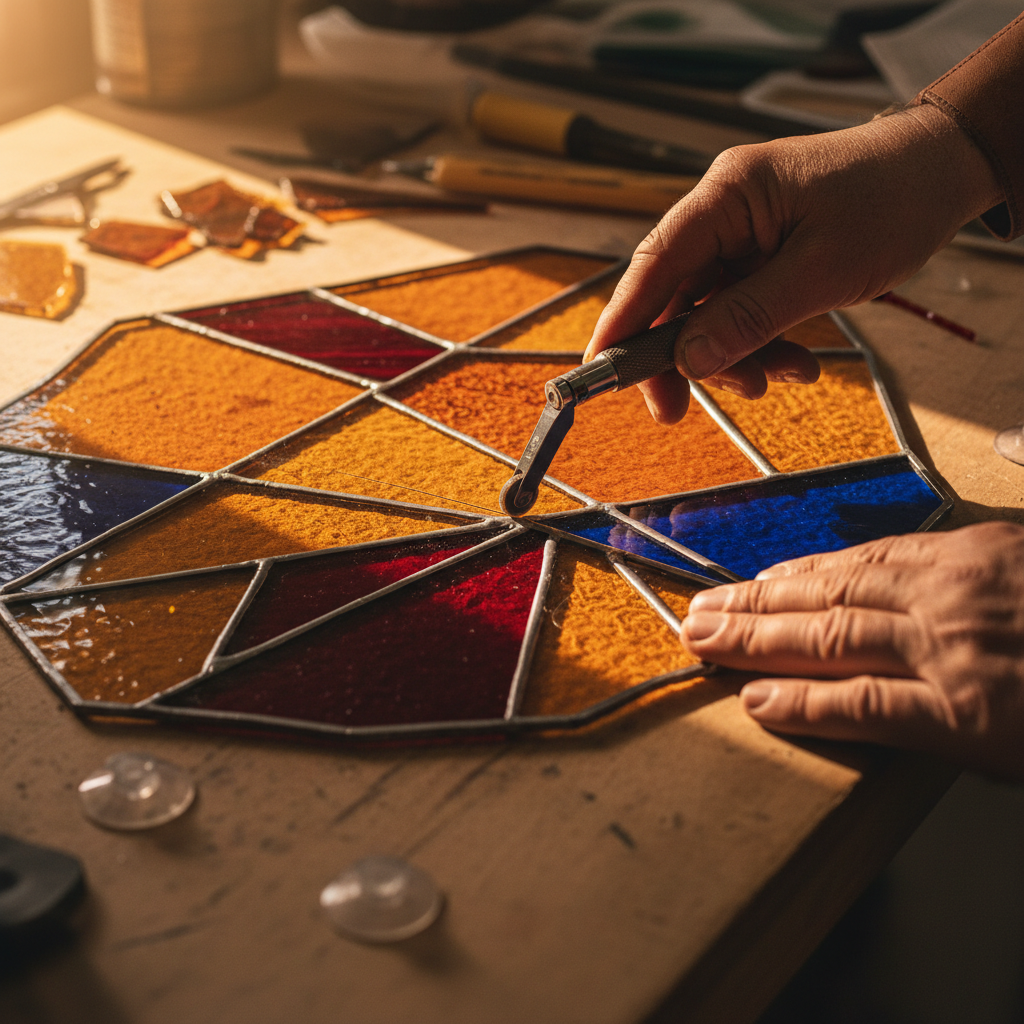
Geometry
Architectural drawings translated into brass templates
Armature
Sheet brass formed, annealed, and silver-soldered by hand
Glass
Each panel hand-cut, fire-polished, and fitted to tolerance
Finishing
Patina applied in controlled stages: raw, tarnished, or blackened
The Lineage of
Precise Light
Every Filament piece carries a genealogy. These are the buildings, rooms, and objects that taught us what light should feel like when it falls on stone.
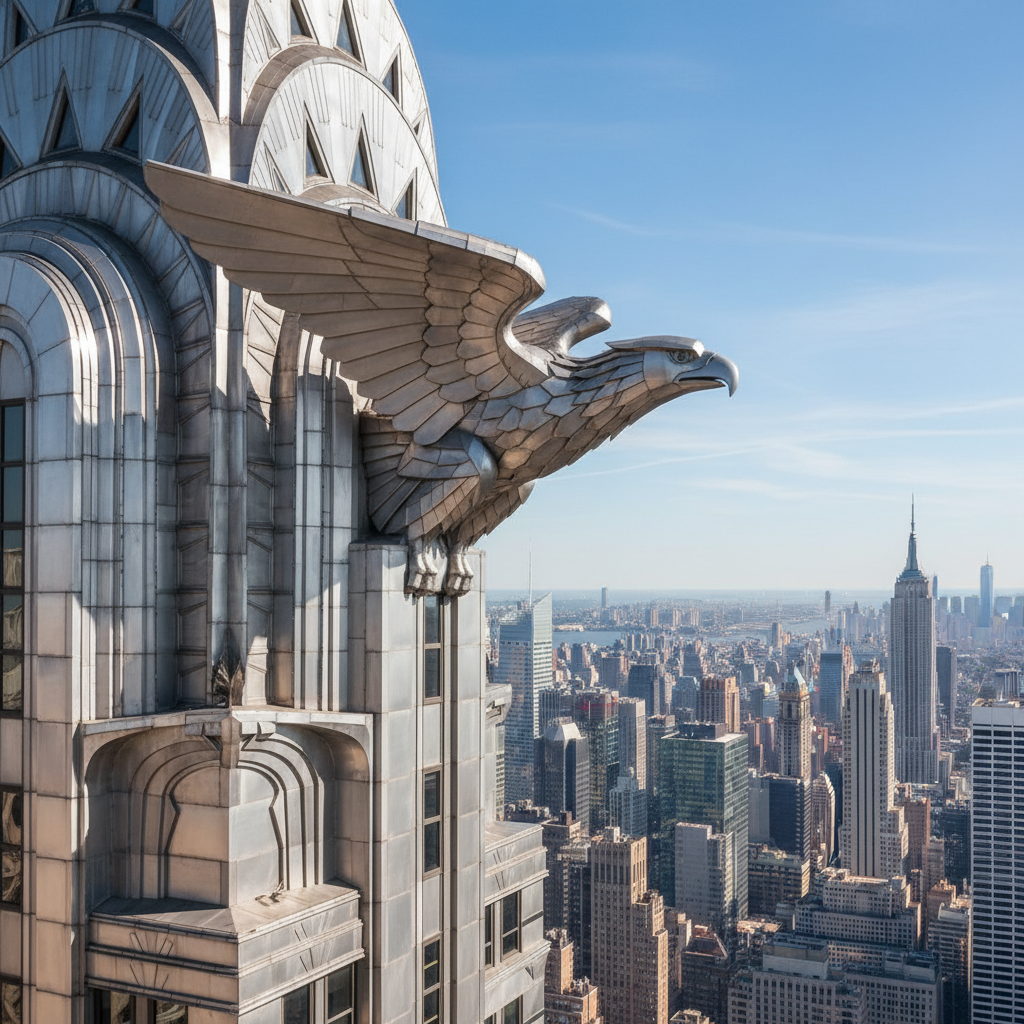
"The sunburst crown — eight radiating arcs of stainless steel, each one a parabola. We borrow the logic: every fixture should read as architecture at ceiling height."
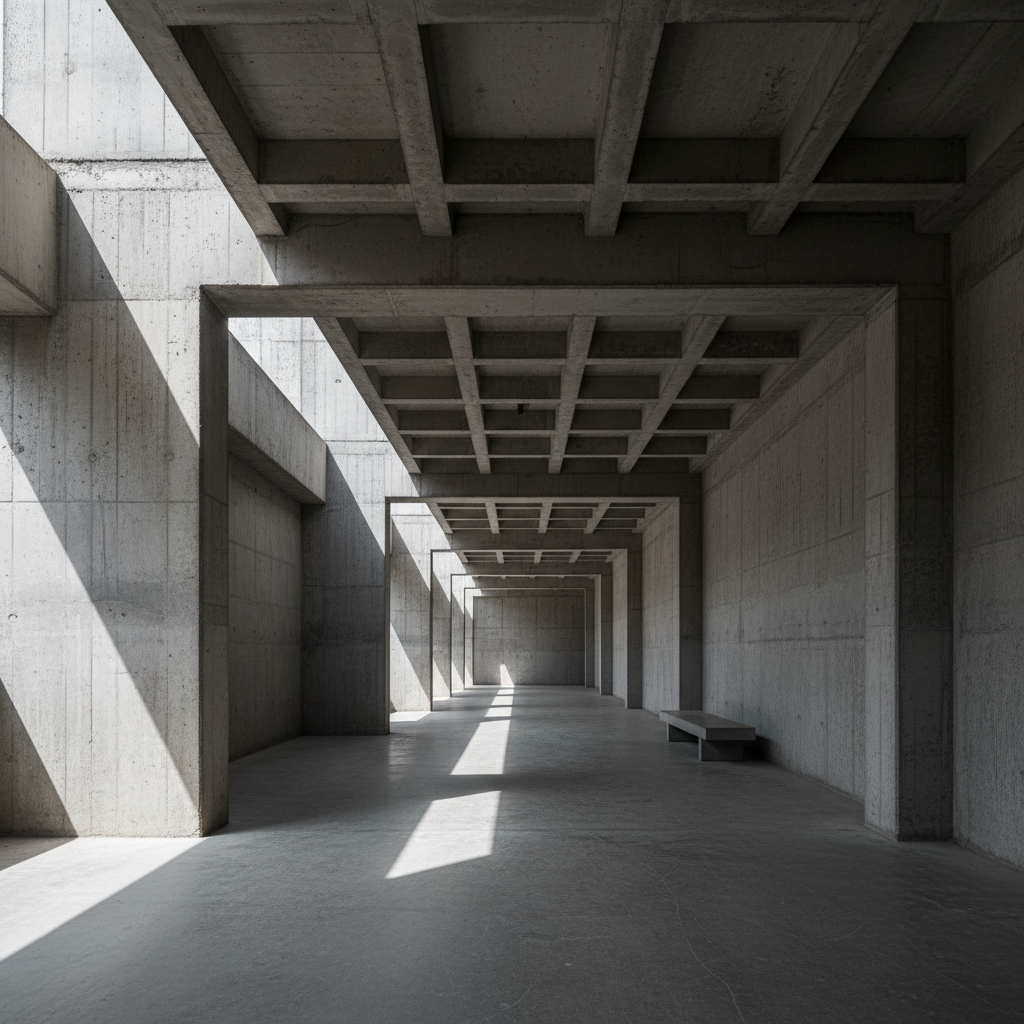
"A house that makes no apology for being a machine. The light fixtures are embedded in the architecture — they do not decorate the room, they are the room."

"The Czechs understood that a lamp could be a sculpture. Faceted planes catching light differently at every angle. We apply this to brass: the patina changes with the geometry."
Fixtures for Rooms
That Earn Attention
All prices reflect single-piece production. Trade pricing available for quantities of three or more.
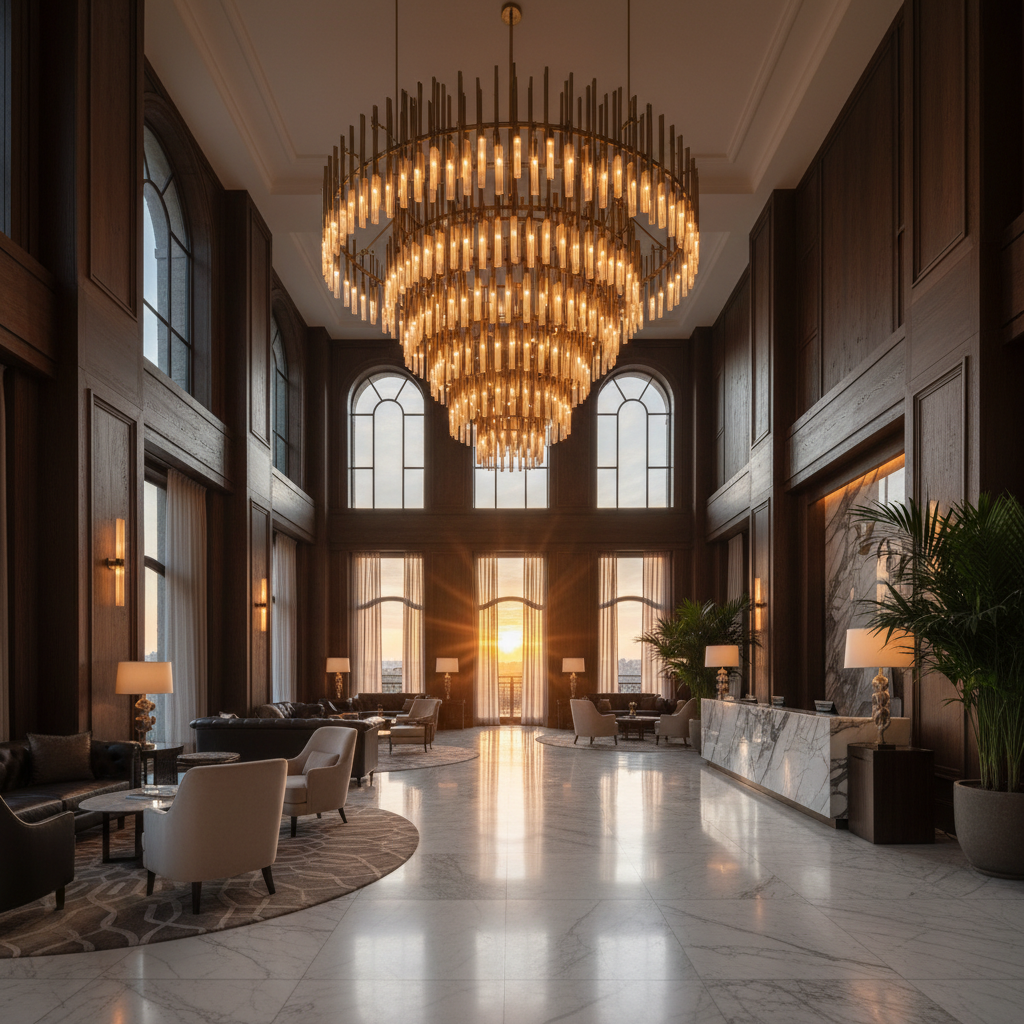
The Meridian
A twelve-arm chandelier derived from the plan geometry of a 1929 ocean liner ballroom. Each arm terminates in a hand-blown amber globe — the glass is deliberately imperfect, trapping a bubble at the center that catches light like a second filament.
The proportions are taken directly from a Cunard deck plan. I wanted the span to feel like a room within a room.
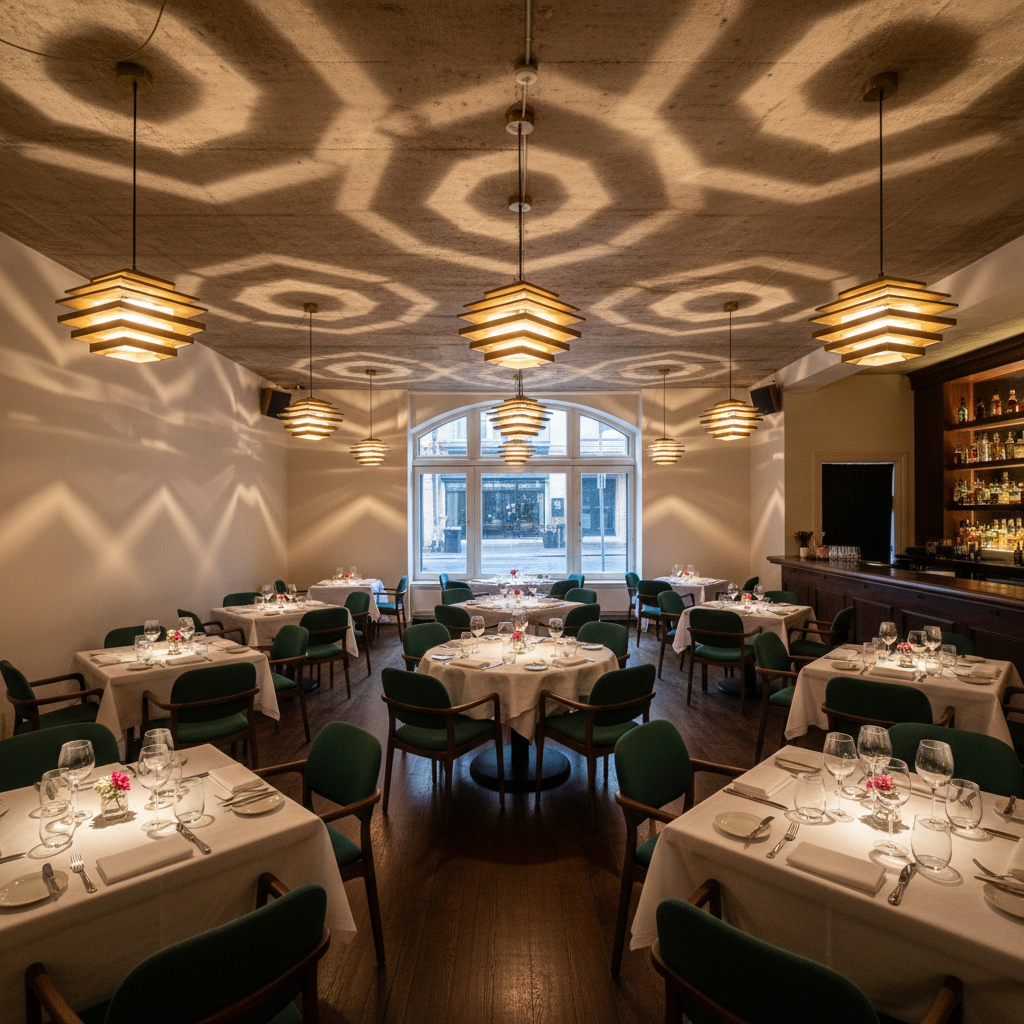
The Ziggurat
Stepped brass tiers descending from a single ceiling plate — the form is lifted from the Babylonian temple and filtered through the 1925 Paris Exposition. The shadow it casts on the ceiling is as deliberate as the fixture itself.
Three prototypes destroyed before the shadow geometry worked. The stepped profile had to be at precisely 22° to cast the correct fan on a ten-foot ceiling.
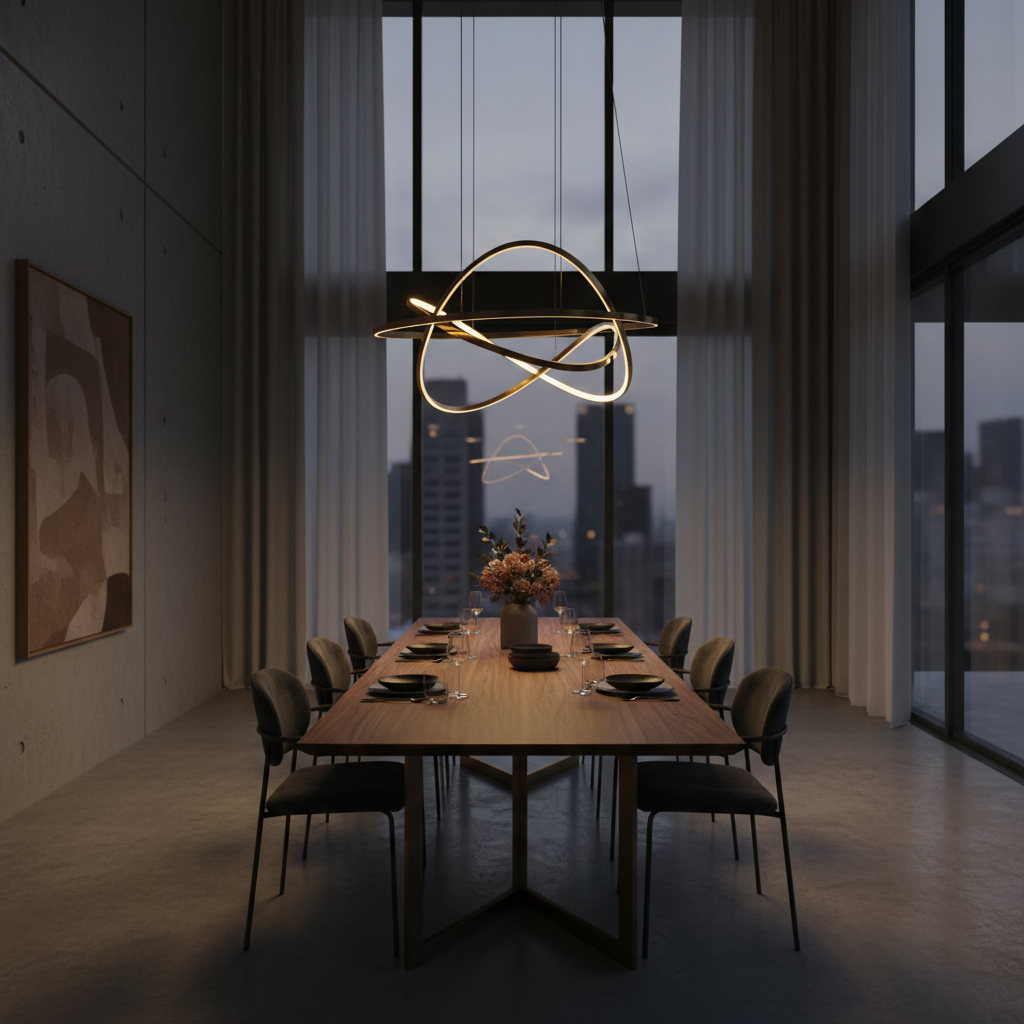
Arc Pendant No. 7
A single suspended arc of polished brass, 60 inches across, carrying nine glass elements at intervals derived from the Fibonacci sequence. Designed for installation over a dining table where the asymmetry of the spacing rewards close attention.
No. 7 because six previous attempts had the wrong weight distribution. The asymmetry is not decorative — it is structural.
Your room is not
a catalog problem.
Bespoke commissions begin with a conversation about the room — its ceiling height, its walls, the quality of its natural light, and the atmosphere you are building toward. We do not design a fixture; we design how the room looks at 9pm.
Submit your project details below. Include room dimensions, any reference images, and your lead time requirements. We respond within 48 hours with a preliminary conversation, not a quote sheet.
What to include
Interior designers and architects receive 20% net pricing on all catalog pieces and priority scheduling on bespoke commissions. Include your firm name in the project field.
The right light does not
illuminate a room. It defines it.
We make fewer than forty pieces per year. If you are building a room that will outlast the decade, begin the conversation now.